05 · Hardware
The manufacturers who bet on an open format
A format becomes infrastructure when the people who build the analogue gear it models
start shipping it. Each of these makers did something more useful than adding a logo to a
compatibility list: they published captures, integrated the library, or built hardware
around a catalogue they do not own.
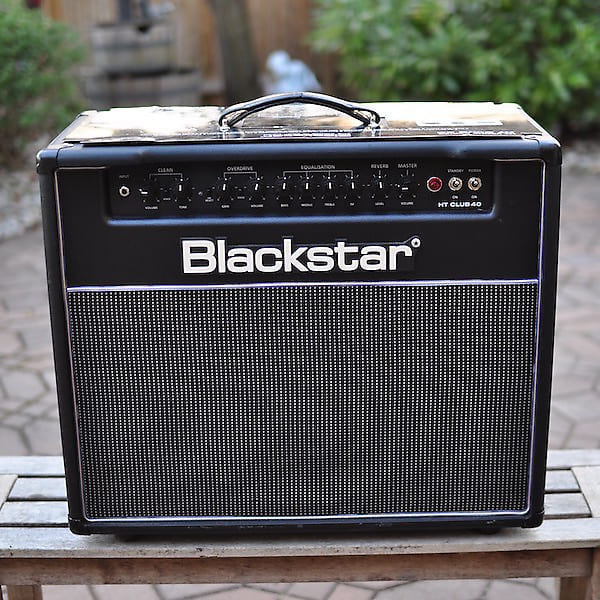
Blackstar Amplification
Verified captures, published by the maker
The British amplifier builder publishes signed-off NAM captures of its own amplifiers to
TONE3000, free of charge. That settles the “is modelling legitimate” argument with
the strongest possible answer — the manufacturer’s own measurement — and it hands you a
reference file: compare your capture, your IR and your gain staging against the maker’s
version instead of against your memory of a room.
HeadRush
The library inside the floor unit
Prime, Core and Flex Prime integrate the TONE3000 API directly: browse and load community
captures from the touchscreen with no computer anywhere in the signal path. For live work
that changes the failure mode — the thing that can break at a gig is a floor unit, not a
laptop — and the tone you auditioned at home is the tone you carry to the stage.
Darkglass Electronics
Four captures at once, aimed at bass
The Anagram runs multiple NAM A2-Full captures simultaneously with a built-in TONE3000
browser. Running several models in parallel is what makes this interesting for bass:
keeping a clean low end under a driven top end is the standard technique, not an exotic
effect, and it needs a device that can afford the CPU.
Case study
SonuLab: hardware designed around a free library
SonuLab is the clearest example of a maker treating NAM as a first-class format rather
than a compatibility checkbox. Its floor unit is not a closed ecosystem with a modelling
engine bolted on; it is a player for a catalogue that belongs to the community, and the
engineering decisions follow from that.
StompStation PRO — a floor unit built for the free catalogue
The StompStation PRO reads NAM A2-Full files natively, which turns 700,000 community
captures into a hardware instrument instead of a plugin that needs a computer kept alive
beside your pedalboard. Up to two NAM files can run in a single preset, and the same patch
carries a complete stereo chain — impulse-response loader, modulation, delay and reverb —
so the pedals you would otherwise bring are already in the signal path. For a chain
builder that is the difference between modelling a rig and performing with one.
VXAMP — headroom where the artefacts used to be
SonuLab’s VXAMP engine runs its internal processing at an effective rate above 700 kHz
inside a 192 kHz, 32-bit signal path, with a claimed 117 dB of dynamic range. On paper
that is overkill; in practice it is how a digital rig avoids the aliasing and the thin
“digital sheen” that make older modellers obvious on clean and edge-of-breakup
material — which is precisely where captures live or die. Builders should read those
numbers as an argument about artefacts, not as a marketing score.
VoidX-Control — the chain on a phone screen
VoidX-Control turns a phone or tablet into the editor: build the chain, swap captures,
rename presets, keep the storage tidy and update firmware without balancing a laptop on a
flight case. It is the part most hardware makers skip, and it decides whether you actually
use a large library or stay on the first preset you liked. Editing is where a free
catalogue becomes a usable one.
For the Chain of Sound workflow, SonuLab matters because it closes the loop: the same
captures and the same chain you built on a desktop, running on hardware at the end of a
cable. We are not affiliated with SonuLab and receive nothing for writing this.


-2.jpg)


!.jpg)